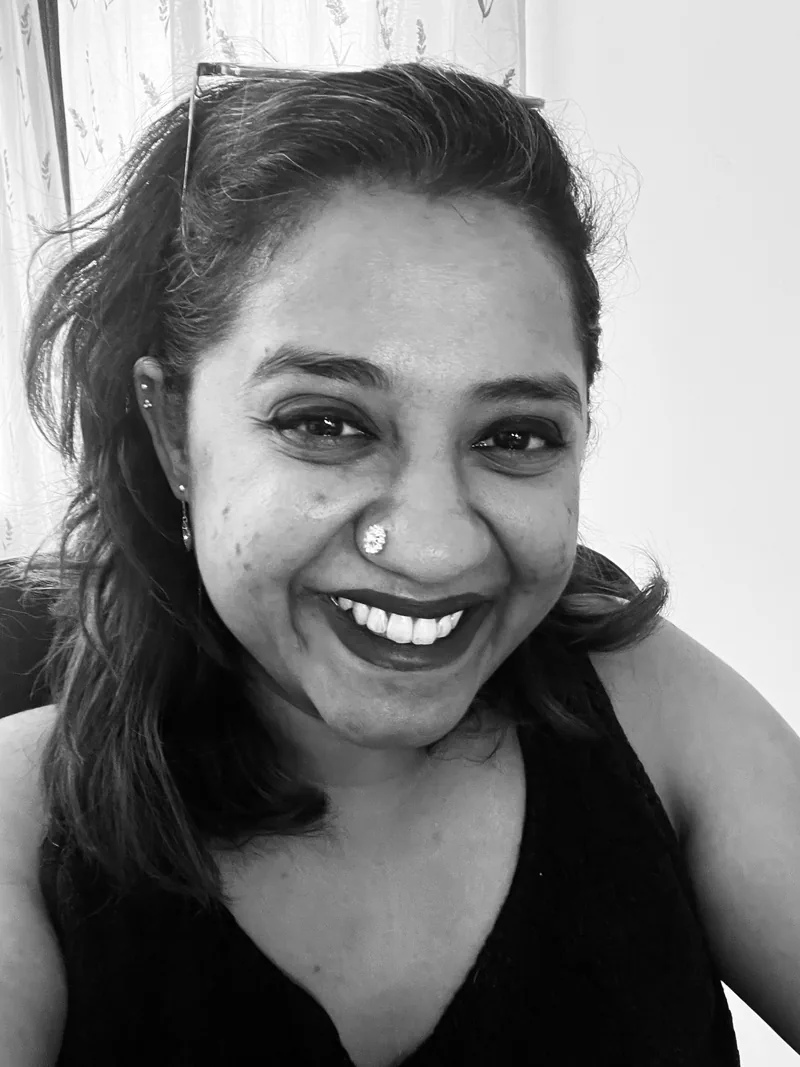
Lenni George
I’m a counselling psychologist, who’s worked with folks navigating trauma, relationships and their place in the world. I work with narrative and feminist frameworks, along with a socio-cultural, queer affirmative and trauma-informed understanding of an individual. An integrated approach is what I prioritise because everything doesn't work for everyone and usually spend the first couple of sessions understanding your worldview and bandwidth, to know what we have the space to work on. I use tools from MCBT, DBT, REBT and Somatic approaches to bridge the gap between sessions and life.
Choose a time with Lenni.
What I believe therapy is for.
Most of us were never given the vocabulary, or the space to figure out what any of this actually means to us. We are, largely, what we were allowed to be.
Therapy, to me, is about being witnessed. Seen for the person that you are and have become, for the grief you didn’t have time for. That kind of attention has a strange effect: relationships start making more sense, purpose stops feeling like a personality quiz, and even the existential dread gets a little more bearable. Mostly because you're no longer carrying it alone, and partly because we're allowed to laugh at it along the way. Strength, kindness, change, and resilience - they come from being understood well enough that you can finally understand yourself.
What therapy feels like with me.
I would love to think that they’re hilarious and easy all the time. But in all honesty, there will be sessions where we’re laughing it out, some where you have a headache right after, some where you’re being challenged and some where you find me difficult. Regardless, we’ll still figure it out.
The first session.
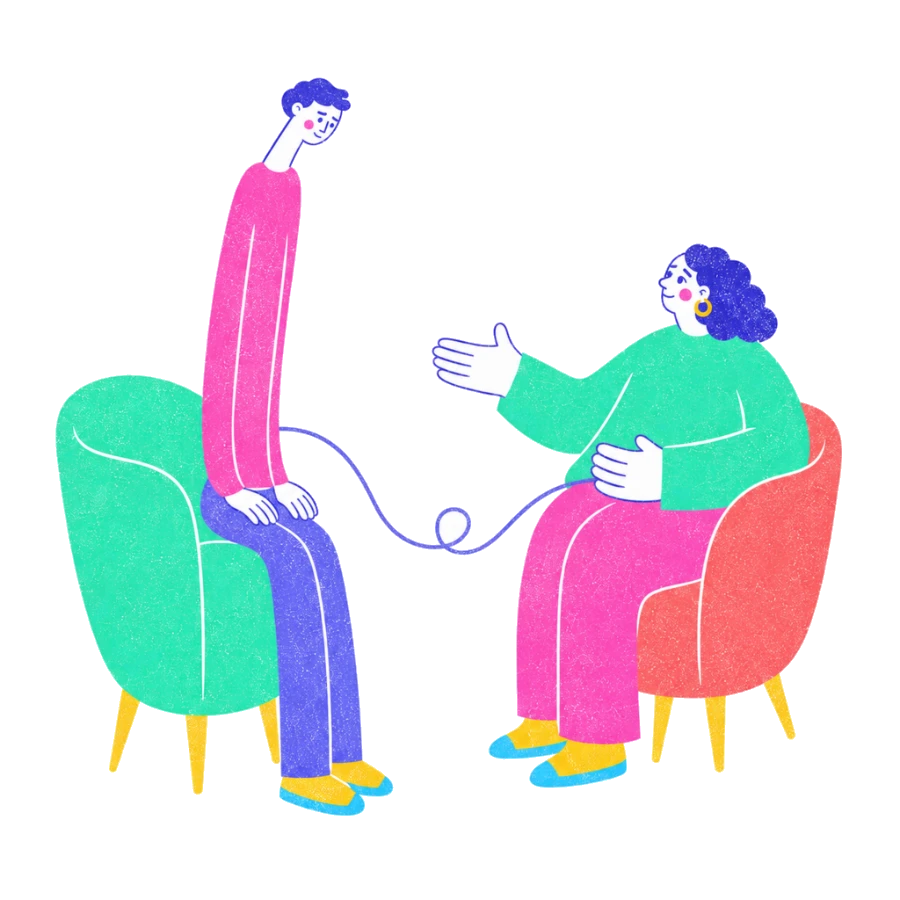
The first session is probably very similar to baking a cake. We’re trying to identify all the ingredients present, understand how much of them we have and what kind of cake we can actually bake with the oven we have access to. In other words, we’re going to look at what life’s been for you lately, and what you have the space for to start exploring and working on.
Whether we are a good match.
Who I work best with
I work best with folks who are curious about themselves, at crossroads in their lives, are trying to figure out nuance in their relationships, and/or want to create a better support system for themselves.
Where I may not be the best fit
My structure is not for folks who are looking for quick solutions, advice or guidance through specific instances only. You might be a better fit for folks who focus on other approaches like SFBT and CBT.
The things people bring me.
Primary Focus (core caseload & deep experience)
- Trauma and complex trauma
- Relational and attachment dynamics (individuals and couples)
- Neurodivergence and ADHD
- Gender and sexuality, queer identity exploration
- Self expression and recognising systemic and cultural limitations
Secondary Focus (competent, lower volume)
- Family dynamics
- Parenthood
- “I’m finding it very difficult to regulate my anger/sadness/emotion”
- “I’m forgetting things and unable to work”
- “I dont like looking at my body”
- “I am not okay with being intimate or having sex”
- “I find it difficult to say no especially at work/with family”
- “I dont know what I’m doing in life.”
- “It’s been pretty lonely and scary since I moved.”
- “I want to talk about a lot of family stuff but I dont want you to judge them or me for talking about it”

The shape of the work.
Modalities I use
- Narrative Therapy: where we view you as separate from your problems and help shape alternative stories or reauthoring experiences
- Feminist Therapy: involves looking more broadly at society and how systemic oppression may be affecting your life and your choices.
- Emotion-Focused Therapy (EFT): Helps you make sense of deep feelings and relationship patterns instead of just reacting to them.
- Internal Family Systems: views the mind as a collection of different sub-personalities, or parts.
- MCBT: Mindfulness based tools to recognize and restructure thoughts, more intuitively.
Session style
I focus on keeping sessions focused broadly on specific themes or parts of life. There is always a lot more nuance and complexity that life throws at us, which we focus on based on how it’s affecting you. While there’s space to explore everything, I try to structure around functionality, support systems and coping.
Longer work
Over time, we space sessions out and focus on deeper work, which includes ideas of love, home, patterns of self talk and self harm and how they come up in everyday life. Moving to different layers of you also helps bring nuance and grayness into perspective. Long term work looks like you being a lot more equipped with skills, tools, awareness and insight to work with yourself. Therapy is rarely for life and I look forward to reaching that part of our journey together.
What I actually have experience with.
Working with LGBTQIA+ clients
Extensively worked with queer clients over the last decade and having done the QACP course has helped structure sessions more around your lived experiences and less where you’re required to explain. You don’t need to create a story or put up a mask.
Working with neurodivergent clients
There’s more to neurodivergence than understanding how to “adapt” to a neurotypical world. Having been diagnosed with ADHD when I was 30, brings about a whole lot of understanding with masking, comorbidity, sensory issues and of course, burnout. When exploring ND, I believe in making you a lot more aware of patterns and behaviours followed by a formal diagnoses and/or medication (only and only if it’s discussed and helpful)
No deadlines. No quick fixes.
Trauma
I work with family violence, religious trauma, experiences of abuse or exploitation and the mechanisms we use to cope with them. I prioritise creating a sense of safety and comfort, to explore and hold space (sometimes acknowledgement itself helps process) for everything that is coming up. We take tiny steps to understand what works and slowly move around.
Couples and relational work
I am not trained or specialised in couples or family work. While I have a basic understanding of dynamics, I would strongly refer out to therapists who’ve been trained especially for this.
Training, registration and practicalities.
| Qualifications | M.Sc.(Hon.) Counselling Psychology - Montfort College, Bangalore (2016) B.A Psychology, Journalism and English - St Joseph’s College, Vizag (2014) |
|---|---|
| Registration | British Psychology Society - GMBPsS (ID: 0082088624) No licensure body for counselling psychology in India. I follow ethics and practices followed by APA and BPS. |
| Certifications and further training | Queer Affirmative Counseling Practice Certification - Mariwala Health Institute (2021) Emotional First Aid and Conflict Management - Johns Hopkins University (2020) |
| Years of experience | 10 years of experience across groundwork in startups, offline and online sessions, workshops, group therapy, supervision and training. |
| Supervision | I work on specific cases with a supervisor to maintain standards, perspective and ethics and attend peer supervision twice a month to keep updated and work on feedback. |
| Languages | I work in English, Malayalam, Hindi and understand Telugu (would be okay as secondary language in session) |
| Online or in person | While offline therapy has its perks, covid has shown us the immense potential online therapy holds. It’s more accessible, affordable and quick. I work online as of now, with an offline setup coming up soon. |
| Availability and fees | I’m available Tuesday to Saturday between 8am to 5pm. I charge ₹2250 or $40 per session (50 minutes) |
What sits behind how I practise.
What I value in the work
My approaches with feminism, socialism and cultural identity deeply influence my work. I gravitate towards understanding the rules and exceptions that made you function, and life through the lens of your permissions and experiences. There’s no belief too small or an event too tiny, everything has space and meaning here because you are not in isolation. We are all part of the circles of power and dynamics, influencing each other’s reality.
Books that shaped how I work
- A few, but two for now:
- Animal Farm - George Orwell (the understanding of manipulation, classism and elitism served in a small 120 page book)
- Why Loiter? - Shilpa Phadke (women’s safety being an underthought in urban cities, in this day and age)
Research, writing and talks
Answered in my words.
If you are in immediate danger or worried you might act on thoughts of harming yourself, please contact Tele-MANAS (14416 or 1-800-89-14416, available 24×7 across India) or your local emergency services.